
In a WP Engine survey, 73% say they use headless CMS. But when it comes to email marketing, what does headless actually mean?
7. oktober 2025
If you send a single newsletter a month, by all means carry on building your mails by hand. But if you want to send many targeted mails with relevant content that gives value to your recipients and revenue to your company, headless email marketing is worth a closer look.
Very briefly, the headless concept is about separating the management of content from the management of how that content is displayed.
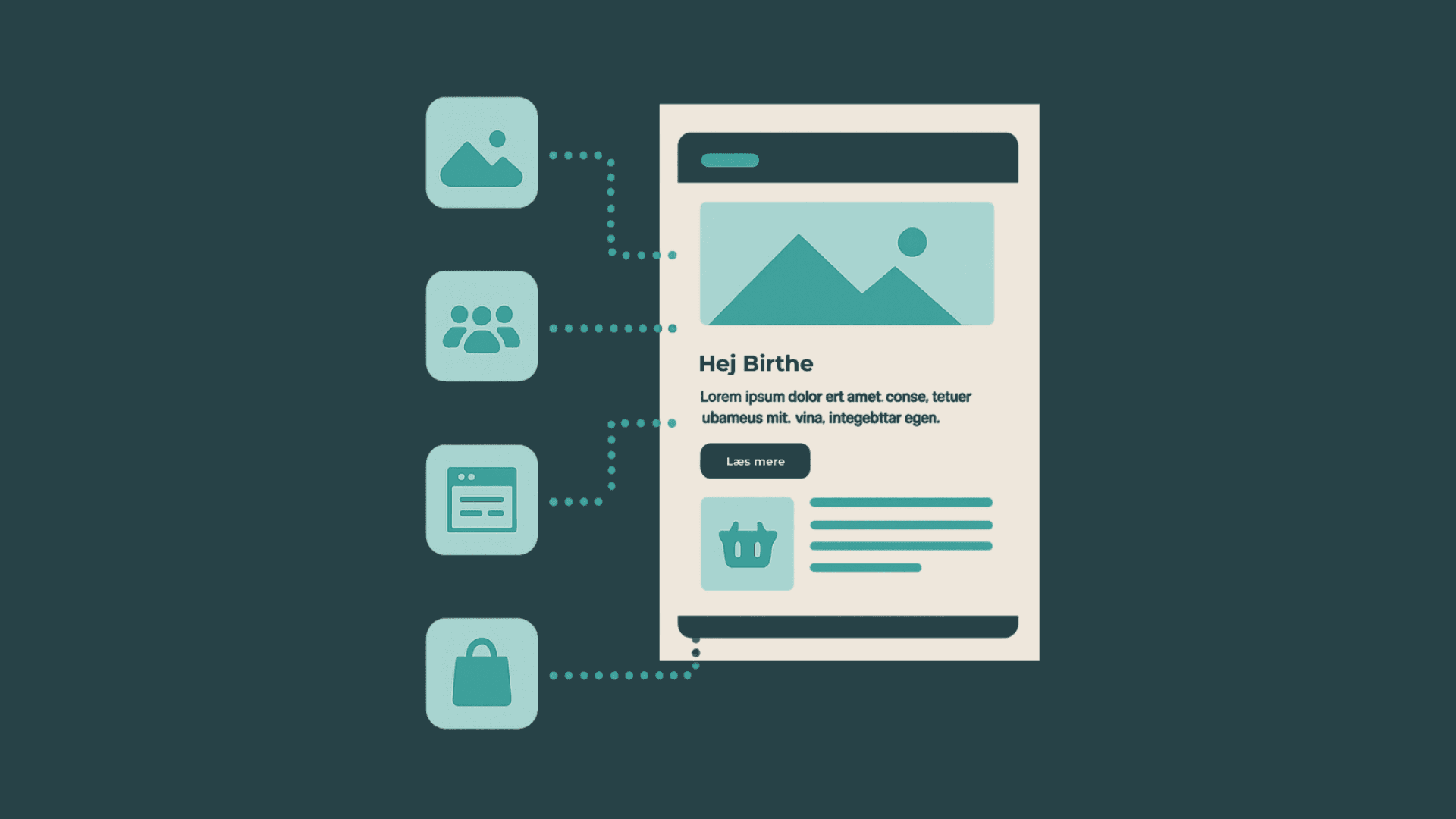
The purpose is to make it easier to reuse content across the different channels it can be used in – different websites, apps, advertising channels and emails.
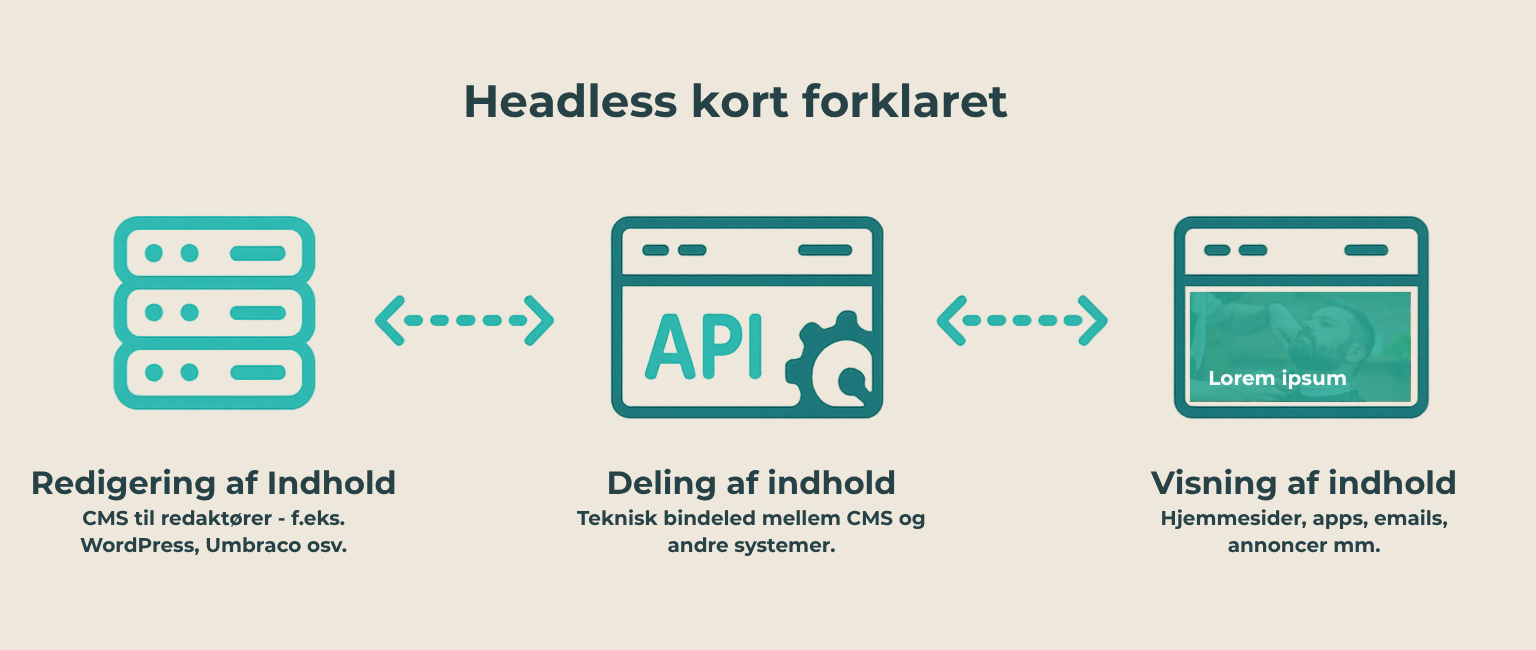
1. Headless email marketing means you do not create your content directly in the system you use to send your mails.
2. You can work with headless email marketing even if you do not use a headless CMS for your website.
But if you already have a headless CMS, it is of course an advantage if you can use the same headless CMS for both your website and your emails.
Being able to use your content in several channels is, after all, exactly why you chose a headless CMS.
If you have a WordPress blog and a newsletter where your recipients simply need the latest blog posts, headless email marketing is close to plug-and-play, even in cheap standard systems.
But if it is a bit more advanced than that, it depends entirely on your company's and your recipients' concrete needs:
Perhaps you need most of your sends to be generated fully automatically.
Perhaps you need to build campaign mails with a great many different variants of your content – so they fit your recipients' concrete needs better.
Perhaps you need to produce a lot of different newsletters, where parts of your content are reused across them.
Perhaps you need all of the above – and have to do it all in 10 languages on top.
Whatever needs you and your recipients have, you need to:
Have a plan for the different kinds of send you want to produce.
Decide what your recipients can subscribe and unsubscribe from among your different mail concepts.
Decide what you need to know about your recipients in order to deliver relevant content.
Decide how you are going to get the knowledge you want about your recipients.
Build a complete overview of all the content you want to use in your mails.
<li">Make sure your content has the tags and metadata needed for you to define rules about which content should be used for your different mail concepts and individual mails.
Have a system that supports this way of working.
Have internal staff and/or external partners who understand the concept and can carry out the execution.
Almost all the content worth sending out in emails you have already created for websites or apps.
If you want to produce several variants of your content, translate it into several languages, or reuse the same content in different mails, then managing the content outside the system you use to send your mails is unquestionably the most efficient way.
At the same time it gives you much better opportunities to use artificial intelligence to produce more variants of the content, translate it, and enrich it with extra metadata.
The most common email marketing systems would like you to use their system to edit your content, because it makes it more awkward for you to switch to another system.
By separating content management from email management, you become less dependent on individual systems and can replace them one at a time more easily.